
Right to Vote and to Stand as a Candidate
Right to vote and to stand as a candidate at elections to the European Parliament guarantees every citizen of the Union the right to vote and to stand as a candidate at elections to the European Parliament in the Member State in which he or she resides, under the same conditions as nationals of that State. Every citizen of the Union has the right to vote and to stand as a candidate at municipal elections in the Member State in which he or she resides under the same conditions as nationals of that State.
Articles 39 and 40 of the Charter of Fundamental Rights
European law (Council Directive 94/80/EC, Articles 39–40 of the EU Charter, etc.) does not directly regulate the system and organization of elections; it focuses on enshrining the fundamental electoral principles of direct, universal, equal, secret, and free participation in elections. The EU Charter guarantees EU citizens the right to vote in both European Parliament and municipal elections in the Member State where they reside, under the same conditions as nationals of that State.
Based on research and human rights advocacy practice, we have identified the following challenges to realizing this right in Ukraine:
- No elections were held due to martial law; since February 2022, 6.9 million people have left Ukraine, of them approximately 4.3 million are in the EU and have temporary protection status, while a significant portion of citizens reside in the occupied territories and in the Russian Federation—these are major challenges that require resolution. Another issue is the participation of military personnel and IDPs in elections. To date, there is no clear public plan that would provide insight into what the authorities intend to do to resolve these issues.
- The issue of restricting certain electoral rights of some citizens due to the armed aggression and transitional justice procedures remains unresolved; for example, the restriction of the right to stand for election for individuals associated with banned pro-Russian parties, which is the subject of ongoing public debate.
- Russia’s armed aggression against Ukraine has created a risk that voter information in the State Voter Registry (SVR) may become outdated due to a lack of systematic data entry and updates, caused by a large wave of migration of citizens both within the country and beyond.
- A person declared legally incompetent by a court in Ukraine does not have the right to vote, which constitutes a discriminatory restriction and contradicts Ukraine’s international obligations.
- The lack of number of overseas polling stations to ensure the proper voting process abroad.
- Due to the Russian Federation’s armed aggression, the issue of accessibility of polling stations for persons with disabilities remains unresolved. Inadequate provision of polling stations with reasonable accommodations to enable persons with disabilities to exercise their electoral rights, including voting, accessing election-related information, observing the process, and participating in the work of election commissions, etc.
- The residency requirement established in Ukraine is unreasonably restrictive and contradicts some of Ukraine’s international obligations and best practices. This requirement is discriminatory under international law. In the context of mass population migration (primarily women), the residency requirement during martial law constitutes a restriction that hinders future return.
- The Law of Ukraine “On Ensuring the Functioning of the Ukrainian Language as the State Language” does not provide for the production of official educational materials for voters, as well as election materials, including ballots, in languages other than Ukrainian, which constitutes a violation of the rights of national minorities.
- Failure to comply with gender quotas on candidate lists.
- The right to vote in local elections is a culmination of freedom of movement within the EU. However, national legislation grants this right exclusively to Ukrainian nationals. In the absence of more specific legislation regarding EU citizens, the lack of clarity regarding this issue may be considered a violation of the EU Charter, specifically Article 40 (and, following the introduction of provisions regarding elections to the European Parliament, Article 39).
- Denying citizens the opportunity to vote solely on the basis of their residence in a particular territory, if the right to vote is granted to citizens of another Member State or a third country, is discriminatory and contrary to EU law. Thus, national legislative provisions defining the electoral address and inclusion in the SVR and voter lists violate the principle of equal voting rights for EU citizens.
- The current system for registering the voting addresses of voters who do not have a registered or declared place of residence to exercise their voting rights is burdensome and requires greater legal clarity in Ukraine.
- In accordance with Council Directive 94/80/EC, a voter must be entered in the list of voters well in advance of election day. The deadline for submitting voter lists to precincts is insufficient to meet the directive’s requirements without including EU citizens in the SVR.
- The provision that only allows Ukrainian nationals to nominate candidates, with no mention of EU citizenship, contradicts Article 10 of the EU Charter, and following the introduction of provisions regarding elections to the European Parliament, also contradicts Article 39.
- Restricting membership in political parties to Ukrainian nationals with voting rights will complicate the nomination of EU citizens during the inter-election period.
For information on the operational challenges facing the Central Election Commission, see a dedicated section.
What Ukraine Needs to Do During the EU Accession Process to Improve the Situation:
Parliament must develop and adopt a public plan for preparing and conducting post-war elections, which should address the key issues related to preparation of elections. This plan should be developed in consultation with various political forces and representatives of civil society.
Complete the implementation of the decisions of the European Court of Human Rights:
- Tomenko v. Ukraine (2025): violation of the applicant’s passive electoral rights due to the premature termination of his/her parliamentary membership by decision of his/her political party following his/her departure from his/her parliamentary faction in 2015–2016 (violation of Article 3 of Protocol No. 1).
- The Selygenenko v. Ukraine case group (2023, Pozdnyakov and Others v. Ukraine, 2025): discriminatory refusal to allow IDPs to participate in local elections.
- Markov v. Ukraine (2022): arbitrary invalidation of elections.
Amendments to the Constitution of Ukraine
- Resolve the issue of elections to the European Parliament, which will require constitutional amendments that may be of a more abstract or detailed nature, with subsequent amendments to laws and bylaw regulations.
- In accordance with Articles 39 and 40 of the EU Charter, to ensure the active and passive voting rights of EU citizens, provide for an exemption of the Ukrainian citizenship requirement from the eligibility criterion in European Parliament and local elections. Specifically, through an interpretation by the Constitutional Court of Ukraine of Article 26 of the Constitution of Ukraine.
- Revise the legal capacity requirements to comply with the recommendations of the OSCE ODIHR and Ukraine’s international obligations under the 2006 UN Convention on the Rights of Persons with Disabilities.
- Improve the procedure for appointing members of the Central Election Commission through constitutional and legislative changes. Under this new procedure, members will be appointed by the Verkhovna Rada of Ukraine based on the President of Ukraine's recommendations following an open competition. For more details on the Central Election Commission, see the dedicated section.
Legislative Changes
- Take effective measures to eliminate obstacles created by the system of residence registration and determining the voting address.
- Enhance the capacity of overseas precincts during national elections to ensure voting by a significantly larger number of Ukrainian citizens abroad, and resolve the issue of ensuring their right to vote in European Parliament elections.
- Extend the deadlines for submitting requests to change a voting address, and ensure that this provision applies to EU citizens of foreign nationality in European Parliament and local elections.
- Take into account the recommendations of the OSCE ODIHR and the challenges posed by the full-scale war regarding the exercise of the passive right to vote, specifically concerning requirements for permanent residence in Ukraine (and exceptions to their application) and the moral qualification (no criminal record).
- Ensure the possibility of effective participation in the political process and elections for EU citizens at the local level in territorial communities where candidates may be nominated exclusively by local political party organizations.
- Introduce systemic changes to Ukraine’s Electoral Code that will guarantee EU citizens the right to vote, to stand for election, as well as related electoral rights (such as the right to serve on an election commission, to participate in pre-election campaigning and its financing, to conduct observation on behalf of individual entities, etc.).
- In accordance with the recommendations of the OSCE ODIHR and the Council of Europe, the provisions of the Law of Ukraine “On Ensuring the Functioning of the Ukrainian Language as the State Language” must be amended to allow for the production of official educational materials for voters, as well as election materials—including ballots—in languages other than Ukrainian, as the current restrictions constitute a violation of the rights of national minorities.
- In accordance with international standards, deprivation of the right to vote and to be elected may only be applied in cases of conviction for serious crimes.
Activities of Law Enforcement Agencies
- Conduct appropriate explanatory and informational campaigns (in particular, regarding the determination or change of a voter’s address) for both EU citizens residing in Ukraine and Ukrainian citizens residing in the EU, taking into account the specific features of the legislation of EU member states.
- Update the SVR data, amend the Law on the State Voter Register (SVR) and the Electoral Code of Ukraine to include information on EU citizens residing in Ukraine who are eligible to vote in European Parliament and local elections, as well as changes regarding the formation and refinement of voter lists.
- Conduct further outreach activities regarding the procedure for changing one’s voting address.
- Take effective measures to ensure the electoral rights of persons with disabilities, in particular by equipping polling stations with reasonable accommodations (to vote, access election-related information, observe the process, participate in the work of election commissions, etc.) and conducting an awareness campaign.
- Review the approach to automatically assigning mobile voting to voters with disabilities, given the high degree of stigmatization they face.
- Ensure consistency in judicial practice regarding the guarantee and restriction of citizens’ electoral rights (for example, regarding gender quotas or the deprivation of the right to hold certain positions and engage in certain activities as sanctions for legal liability).
For a more detailed overview of the EU and Ukraine’s acquis and case law related to this right, and the rationale for our recommendations, please see the research section of this page. Specifically, see the document available only in Ukrainian: Ensuring Electoral Rights: Compliance of National Mechanisms with EU Standards. If you have any feedback or comments about this material, please send them to: hrmap@ccl.org.ua.
Published materials may be used provided that a mandatory link to the original source is included. © 2026 Center For Civil Liberties.
Experts

Olha Kotsiuruba
Senior Legal Advisor of the Civil Network “OPORA,” PhD

Pavlo Romaniuk
Legal advisor of the Civil Network “OPORA,” coordinator of the Election Law Center of the Yaroslav Mudryi National Law University

Bohdan Mokhonchuk
Legal Advisor of the Civil Network “OPORA,” PhD, Associate Professor of the Yaroslav Mudryi National Law University
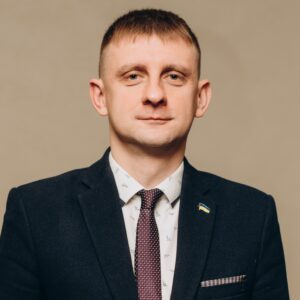
Volodymyr Kobryn
Candidate of legal sciences, associate professor of the Department of Constitutional Law of the Ivan Franko National University of Lviv

OPORA