
Freedom of Peaceful Assembly
Everyone has the right to freedom of peaceful assembly and to freedom of association at all levels, in particular in political, trade union and civic matters, which implies the right of everyone to form and to join trade unions for the protection of his or her interests
Article 12 of the EU Charter of Fundamental Rights
Text as of April 2026
Based on research and human rights practice, the following problems in the exercise of this freedom in Ukraine can be distinguished:
- The lack of a basic law on peaceful assemblies. Ukraine has not yet adopted a special law on the freedom of peaceful assembly. The ECtHR judgment in the case of Vyerentsov v. Ukraine, requiring that appropriate laws be adopted, has remained unenforced for over 13 years. The legal regulation relies on Article 39 of the Constitution, the provisions of the Code of Administrative Proceedings governing the hearing of cases involving restrictions on the freedom of peaceful assembly, and the case-law of the ECtHR and the Constitutional Court of Ukraine. However, this allows the authorities to exercise extensive discretionary powers to restrict peaceful assemblies in practice. The legislation fails to clearly determine the procedure for giving notice of peaceful assemblies, and the obligations and rights of local authorities, to define the grounds and procedure for the potential dispersal of an assembly by the police once it has started, and to regulate many other important issues. Moreover, the laws give rise to a lot of uncertainty as they simultaneously apply the concepts of “mass events” and “peaceful assemblies” that differ significantly in terms of their legal regulation. Article 39 of the Constitution prescribes that everyone give notice of a peaceful assembly, thereby making it formally more difficult to hold spontaneous gatherings. Since 2006, the Venice Commission and OSCE/ODIHR have delivered joint opinions on draft laws about peaceful assemblies on three occasions (in 2006, 2009/2010, and 2016; CDL-AD(2006)033, CDL-AD(2010)033, and Opinion 854/2016); however, neither of them has been approved by the Verkhovna Rada. The Joint Opinion of 2010 stated that the draft law contained provisions that lack clear standards to guide official decision-making, thereby creating a potential for abuses. The Opinion of 2016 concerning two alternative draft laws (Nos. 3587 and 3587-1) noted that they remained excessively detailed with excessive differentiation of categories of events and failed to reflect sufficiently the presumption in favor of holding assemblies and the proportionality principle.
- Restrictions of martial law. The current legislation entirely forbids strikes during martial law and grants local military administrations the power to temporarily ban peaceful assemblies in certain territories. The practice of law application remains somewhat confused due to legal uncertainty, as no clear criteria or procedures for prohibition have been defined. However, peaceful assemblies are held, as a rule, during martial law under the general procedure of notifying local authorities of a peaceful assembly. Courts made virtually no decisions to restrict the freedom of peaceful assembly based on petitions from local authorities during martial law. There are significant discrepancies in the ways different regions regulate peaceful assemblies during martial law. Orders of military administrations differ greatly, from entire prohibition to the establishment of notification procedures. Although in practice, this does not give rise to bans on assemblies, it is, nevertheless, a demonstration of the lack of proper legal regulation. This creates legal uncertainty and inequality of citizens depending on their place of residence. Military units of the Ministry of Internal Affairs (the National Guard) and the Armed Forces of Ukraine have been involved in maintaining order during martial law. Their members lack the skills to act during peaceful assemblies, have no personal identification, and lack the skills to communicate with protesters, which largely increases the risk of provoking violence and their irresponsibility.
- Restrictions on national minorities Pursuant to the Law on National Minorities (Communities) in Ukraine (clause 3 of its Transitional Provisions), for the period of martial law and for the six months following its cancellation or termination, the freedom of peaceful assembly is subject to temporary restriction in terms of its exercise and protection, for people identifying their ethnic origin with a country recognized in Ukraine and/or by international organizations as a terrorist state (an aggressor state) committing acts of aggression against Ukraine. The Venice Commission recognized in its Opinion that such restrictions were possible in times of armed aggression, but stressed that “any restriction should not be discriminatory”. The application of an additional six-month restriction after the martial law is terminated, specifically to minorities’ rights, can be regarded as disproportionate and discriminatory. General restrictions must be replaced by an individual assessment of security risks made by a court. Moreover, it is unclear how the ethnic origin of participants in such assemblies will be checked.
- The obstruction of and putting an end to peaceful protests through excessive force. In the cases of Shmorgunov and Others, Lutsenko and Verbytskyy, Kadura and Smaliy, Dubovtsev and Others (judgments of 2021) related to Euromaidan events of 2013-2014, ECtHR has found multiple violations of Article 11 together with Articles 3, 5, and 3, noting that “the violence used and unlawful detentions were a deliberate strategy of the authorities to obstruct and stop initially peaceful protest through excessive force”. The Ukrainian laws lack appropriate safeguards against such practices of authorities.
- Restrictions for foreign nationals and stateless persons. Article 39 of the Constitution guarantees the right of peaceful assembly to “citizens” only. However, the Venice Commission and OSCE/ODIHR have consistently emphasized in each of their opinions that the freedom of peaceful assembly must be guaranteed to each person under the state jurisdiction, regardless of their nationality or legal grounds for staying in the country. The absence of legislative guarantees of the freedom of assembly for non-nationals is contrary to the Charter of Fundamental Rights of the European Union (Art. 12).
- The Ukrainian legislation allows strikes to protect labor rights only and does not allow them for other purposes, such as political, economic, etc., which is contrary to certain Ukrainian traditions. The list of legitimate purposes for strikes should be broadened.
What Ukraine Needs to Do While Acceding to the EU to Improve the Situation:
- Prompt adoption of a Law on Guarantees of the Freedom of Peaceful Assembly. The Ministry of Justice must develop, and the Verkhovna Rada must approve a Law on Guarantees of the Freedom of Peaceful Assembly based on three joint opinions of the Venice Commission and OSCE/ODIHR (of 2006, 2010, and 2016), and the OSCE/ODIHR Guidelines on Freedom of Peaceful Assembly. The Law must:
- define and differentiate between the concepts of peaceful assemblies and mass events;
- establish presumption in favor of holding assemblies;
- introduce a clear and exhaustive list of grounds for restricting this freedom with the requirement of proportionality and necessity in a democratic society;
- guarantee freedom of assembly to all persons under the jurisdiction of Ukraine, including foreign nationals and stateless persons staying illegally in the territory of Ukraine;
- determine the right to spontaneous assemblies and counter-assemblies;
- determine the procedure for terminating an assembly by police once it has started: clearly define grounds and the relevant procedure for that; include a requirement that an assembly termination report must be drawn up with further potential judicial oversight; define liability for the police for unlawful termination of an assembly; and define the grounds and the procedure for using non-lethal weapons;
- provide identification of all representatives of law enforcement bodies and other authorities involved in maintaining public order during peaceful assemblies;
- establish clear rules for the use of video surveillance means and recognition technologies during assemblies, compliant with the EU AI Act, 2024, and the FRA opinion on biometric surveillance;
- guarantee the protection of journalists, media staff, and the staff of organizations that monitor or observe compliance with the freedom of peaceful assembly.
- The review of restrictions imposed on the freedom of assemblies by martial law. The provision that completely prohibits strikes during martial law should be cancelled as it severely affects the protection of workers’ labor rights. Laws on martial law, local military administrations, and local governance should be harmonized in terms of the regulation of peaceful assemblies and the imposition of additional restrictions during martial law. All restrictions to be imposed during martial law must be established by law.
- Protection of minority rights in the context of freedom of assemblies. The Verkhovna Rada of Ukraine must revise Section V of the Transitional Provisions of the Law on National Minorities (Communities) to remove the ban on peaceful assemblies during martial law and the six-month additional restriction of the freedom of assembly after the martial law is over, in compliance with the recommendations of the Venice Commission on the non-discriminatory nature of restrictions and in accordance with the Council of Europe’s Framework Convention for the Protection of National Minorities. Restrictions should be applied individually based on assessments of existing real risks made by courts.
- Execution of ECtHR judgments related to the events of 2013–2014 and ensuring liability. Develop and implement a comprehensive plan for the execution of ECtHR judgments concerning violations of Article 11 of ECHR in the Shmorgunov and Others group of cases (2021), including the establishment of an independent mechanism to investigate law enforcers’ actions during public events; payment of compensation to victims; regulation of the procedure for the use of non-lethal weapons and force against assembly participants; and the obligatory identification of all law enforcement personnel during peaceful assemblies.
- Strengthen the introduction of the Scandinavian approach to public order policing during peaceful assemblies and broaden the scope of work of the dialogue police. Introduction of the dialogue police in all cities of Ukraine, their training, and the consolidation of best practices to resolve conflicts during peaceful assemblies through dialogue and reduced use of force by police officers. Conduct training for police units involved in maintaining order during peaceful assemblies.
- Identification of law enforcement officers and members of military units involved during peace assemblies. During peaceful assemblies, all law enforcement officers and members of military units involved in maintaining order during such assemblies must wear clear individual identification badges. The uniform they wear must accommodate these requirements and ensure that those badges are visible in all weathers.
- It is recommended that a system to collect data on the number of peaceful assemblies, restrictions, violations of participants’ rights, and the acts of police be established. In its report of 2024, FRA emphasizes the importance of data collection for civil society developments monitoring. Also, OSCE/ODIHR stresses, in their thematic reports, that data must be consistently collected to assess how the freedom of peaceful assemblies is implemented. These data should be published in the public domain. As of now, Ukraine lacks comprehensive statistical data on the freedom of peaceful assemblies.
- Execute ECtHR judgements in cases against Ukraine:
- The Vyerentsov v. Ukraine group of cases, in terms of clear regulation for the exercise of freedom of peaceful assemblies and establishing clear responsibility for participants in assemblies and representatives of authorities.
- The Shmorgunov and Others group of cases (Shmorgunov and Others, Lutsenko and Verbytskyy, Kadura and Smaliy, Dubovtsev and Others), in terms of establishing safeguards against disproportionate use of force to disperse peaceful assemblies or obstruct them.
If you have any feedback or comments about this material, please send them to: hrmap@ccl.org.ua.
Published materials may be used provided that a mandatory link to the original source is included. @ 2026 Center for Civil Liberties.
Experts
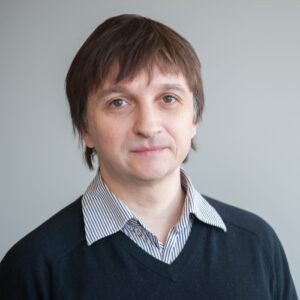
Volodymyr Yavorskyy
lawyer, human rights defender, program director of the NGO “Center for Civil Liberties”